

The global confectionery market is one of the most vibrant and fast-growing segments of the food and beverage industry. It encompasses a wide variety of sweet treats, including delicious chocolate, sugar-based confections such as candies, gummies, and hard sweets, as well as chewing gum and other indulgent delights.
Looking for largest chocolate manufacturers in the world? BakeMate stands as one of the largest global chocolate manufacturers, delivering premium chocolates, biscuits, wafers, and confectionery across international markets. Much like the major companies above, BakeMate’s global reach and diverse product portfolio position it among the industry’s influential players.
These products are enjoyed by people of all ages and across diverse cultural backgrounds, serving not only as everyday snacks but also as popular choices for festive occasions, holidays, and special celebrations.
Estimating the exact size of the confectionery industry can vary depending on how different sources define the market. However, industry data from Statista suggests that global confectionery sales generate approximately USD 619 billion in annual revenue. Western Europe contributes nearly one-third of this total, while North America and the Asia-Pacific region also represent significant and fast-growing markets.
The industry is highly competitive, featuring a mix of global multinational companies and strong regional and local manufacturers. To stay ahead, confectionery producers consistently invest in innovation, brand building, packaging design, and efficient distribution networks. Changing consumer preferences are shaping product development, with rising demand for premium chocolates, sugar-free options, and functional or better-for-you confectionery. Established manufacturers benefit from well-developed supply chains, modern production facilities, and wide retail reach across both traditional stores and modern trade channels.
A small number of major players dominate the global landscape and are widely recognised as the world’s largest candy manufacturers. These companies hold a significant market share through their iconic brands, diverse product portfolios, and strong international presence. Operating across multiple regions allows them to serve large-scale demand while tailoring products to suit local tastes and cultural preferences. At the same time, emerging confectionery manufacturers from Asia, Latin America, and Africa are gaining momentum, adding diversity and fueling further market growth.
Overall, the global confectionery market continues to expand at a steady pace. Strong consumer demand, continuous innovation, and the influence of leading confectionery manufacturers play a crucial role in shaping industry trends, driving consumption, and defining the future of sweet indulgence worldwide.
2. Market Size & Forecasts
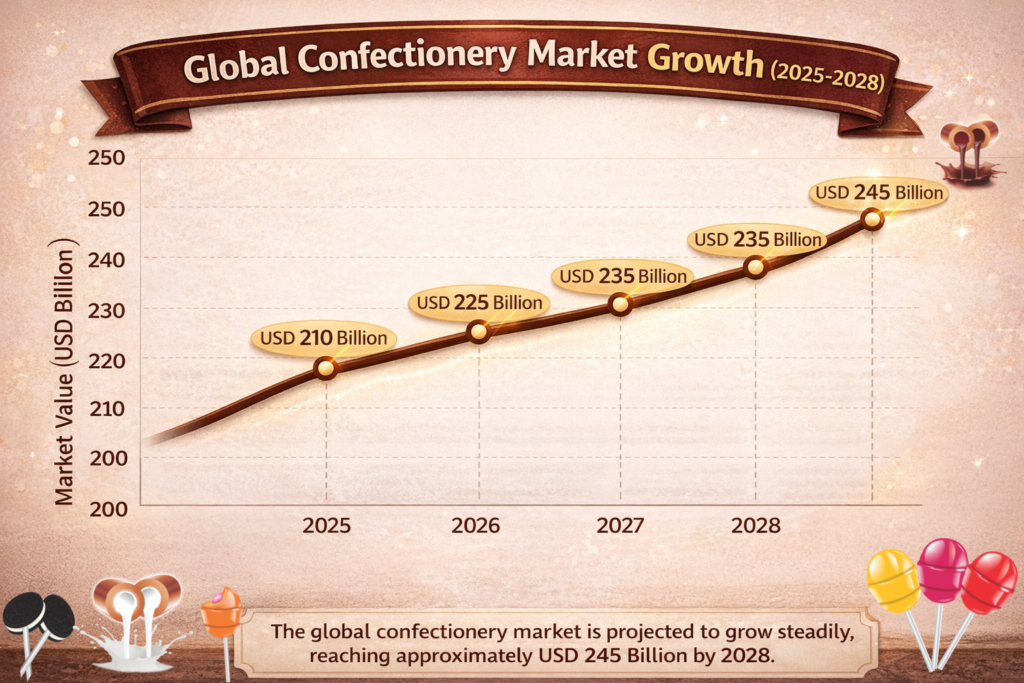
2.1 Overall Market Scale The global confectionery market represents a substantial and steadily expanding segment of the food and beverage industry. In 2024, the market is widely estimated to be valued at over USD 200 billion, reflecting strong and consistent demand for chocolates, sugar confectionery, and related indulgent products worldwide. Industry analysts anticipate continued expansion throughout the mid-to-late 2020s, driven by evolving consumer preferences, premiumization, and innovation across product categories.
Long-term forecasts extend even further. Some market intelligence reports project that the global confectionery market could reach USD 422–473 billion between 2030 and 2035, indicating sustained value growth over the next decade. Alongside value expansion, global consumption volumes are also expected to rise significantly. Projections suggest worldwide confectionery consumption may increase to approximately 86–91 million tons by 2030, highlighting growing penetration across both developed and emerging economies.
It is important to note that market size estimates vary across studies. These differences largely arise from how “confectionery” is defined—whether reports include adjacent snack categories or focus strictly on chocolate and sugar confectionery—as well as variations in pricing assumptions, inflation adjustments, and regional coverage.
2.2 Growth Trajectory
Overall, the confectionery market is forecast to grow at a compound annual growth rate (CAGR) of approximately 2.2% to 4.4% between 2024 and 2030, depending on whether growth is measured in terms of volume or value. While mature markets exhibit relatively moderate expansion, emerging economies continue to make a strong contribution to overall growth, driven by rising disposable incomes and increasing urbanisation.
Among product segments, sugar confectionery—including candies, gummies, and chews—often records higher growth rates of around 4–5% CAGR. This momentum is supported by continuous product innovation, flavour experimentation, and broader appeal across age groups, particularly in developing markets.
Chocolate, which commands the largest share of the global confectionery market by value, remains a key growth driver. Premium chocolates, dark chocolate variants, and functional offerings—such as reduced-sugar, organic, and fortified products—are gaining popularity among health-conscious and aspirational consumers. This shift toward premium and differentiated products continues to elevate both market value and brand competitiveness worldwide.
By Product Type The confectionery market is commonly divided into several key product types based on ingredients, consumer preferences, and manufacturing methods. Confectionery manufacturers actively shape these segments by developing a wide variety of products that cater to different taste preferences, price ranges, and consumption occasions across global markets. This strategic diversification helps manufacturers remain competitive while meeting the evolving expectations of consumers.
3.1.1 Chocolate Confectionery
Chocolate represents the largest and most valuable segment within the global confectionery market, accounting for nearly half of total consumption worldwide. This category encompasses milk chocolate, dark chocolate, white chocolate, and a diverse range of premium and specialty chocolate products. (Astute Analytica)
Owing to its widespread consumer appeal and steady demand, leading confectionery manufacturers dedicate significant focus to chocolate production. This segment enjoys strong brand loyalty, high profit margins, and broad acceptance across various age groups and cultures. Furthermore, global chocolate exports play a pivotal role in the industry, as countries with advanced chocolate manufacturing capabilities supply products to international markets, driving revenue growth and encouraging continuous innovation in flavors, quality, and packaging.
Several key factors are driving growth in the chocolate confectionery segment: • Premiumization: Consumers are increasingly drawn to high-quality, artisanal, and single-origin chocolates that offer superior taste and perceived health benefits. Dark chocolate, in particular, is gaining popularity for its antioxidant properties. In response to this trend, major confectionery manufacturers are expanding their premium, organic, and ethically sourced chocolate offerings. (Emergen Research) • Innovation: Ongoing innovation plays a crucial role in sustaining interest in chocolate products. Manufacturers regularly introduce new flavors, textures, fillings, and limited-edition or seasonal variants to attract consumers and differentiate their brands. Significant investment in research and development allows confectionery manufacturers to remain competitive and respond quickly to changing market trends.
Sugar Confectionery
• Sugar confectionery includes a wide variety of traditional sweet products such as candies, gummies, jellies, lollipops, boiled sweets, caramels, toffees, and other sugar-based treats. This segment continues to be one of the fastest-growing areas within the global confectionery market, largely due to its broad appeal across different age groups and its affordability compared to premium chocolate products. (StrategyHelix)
• Sugar confectionery products are particularly popular for impulse purchases and everyday snacking, making them highly visible across convenience stores, supermarkets, and small retail outlets. Confectionery manufacturers leverage this segment to introduce playful flavours, vibrant colours, and innovative shapes, including centre-filled candies, which strongly attract younger consumers while also appealing to adults seeking nostalgic treats. Additionally, growing interest in sugar-reduced formulations, natural ingredients, and functional candies is encouraging manufacturers to evolve traditional offerings to align with health-conscious consumer trends.
Gum and Other Products
Chewing gum and bubble gum represent a smaller yet important share of the global confectionery market. Growth in this segment is increasingly driven by functional product innovations, such as sugar-free gums, dental-health gums, and products designed to promote fresh breath, oral care, or added wellness benefits.
Modern confectionery manufacturers are repositioning gum products beyond indulgence by emphasising functionality and lifestyle benefits. Advancements in sweetener technology and ingredient formulation have enabled manufacturers to meet rising consumer demand for healthier alternatives, particularly among urban and health-aware consumers. As a result, gum products continue to maintain relevance in a market that is gradually shifting toward balanced indulgence and functional snacking.
Conclusion
The global confectionery industry continues to demonstrate strong resilience and lasting appeal, maintaining its position as a key segment of the food and beverage market. Rooted in long-standing traditions yet driven by continuous innovation, the industry has successfully adapted to changing consumer lifestyles, preferences, and expectations. Its ability to cater to diverse age groups, cultures, and consumption occasions has supported steady growth across both developed and emerging markets.
While challenges such as increasing health awareness, sugar reduction initiatives, and fluctuations in raw material prices remain, confectionery manufacturers are responding proactively through product reformulation, premiumization, and sustainable sourcing practices. The growing demand for healthier alternatives, functional products, and ethically produced confectionery is reshaping the competitive landscape and encouraging long-term innovation.
Looking ahead, the confectionery sector is well-positioned for continued expansion through the 2030s. Rising disposable incomes, expanding retail and e-commerce channels, and the enduring appeal of affordable indulgence are expected to support future growth. Overall, the industry’s adaptability, creativity, and strong consumer connection suggest a positive and sustainable outlook in the years to come.
Tags
- Largest Chocolate Manufacturers
- Confectionery
- Biscuits Manufacturers
- Delicious
- Chocolate Biscuit Manufacturers
- Largest Chocolate Manufacturers
- Bourbon Biscuits
- Eclairs